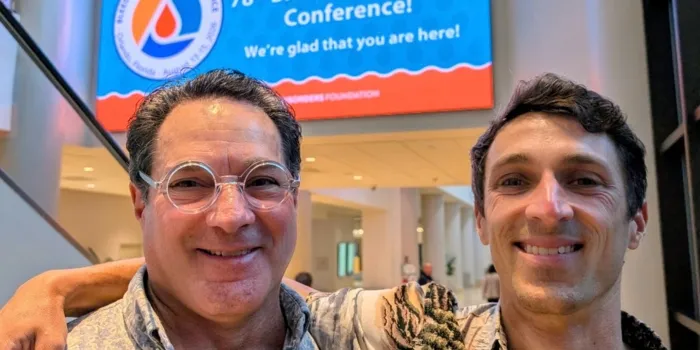
Zack Stein: Despite being diagnosed with severe hemophilia just after I was born in 1991, I was always a bit reckless as a child — going on adventures, playing in the creek, and getting hurt. Hemophilia is part of my life, but it isn’t my life.
Our first hematologist told my family I should wear a helmet, sit in a corner, and play it safe. My parents didn’t accept that as the life they wanted for me and looked for alternative strategies. That’s how they found Dr. Robert Bergamini in St. Louis. While most people were only infusing as they got bleeds, he took a proactive approach to ensure I could live as normal a life as possible by not only managing bleeds as they came, but by using a prophylactic strategy, which was novel at the time.
Scott Stein: When Zack was diagnosed at six weeks old, we were shocked — back then the life expectancy wasn’t promising — but once we started learning more about hemophilia we calmed down. It was helpful that my wife and I are both physical therapists.
He was always able to do whatever he wanted, within limits. If we felt he was relatively safe doing something, then he did it.
From a Bike to a National Championship
Zack: When I graduated eighth grade, my dad offered me $500 for either a car or a bike. I chose a bike. My dad encouraged me to race, and that’s what kicked off my four-year competitive cycling career. I won my first race by surprise and realized there was something there. My career culminated in a national championship in 2009 while also racing around the country for various teams, including the U.S. national team.
The race director was fully aware of my condition, and many of the larger races had ambulances. Staff flagged my race number in case there was an incident so they could take the necessary precautions.
My career ended tragically when I was in an accident at the end of the 2009 season that destroyed my right ankle. I spent two years recovering, and today it’s around 85% healed.
Scott: Cycling was his passion, and we truly supported him with good equipment and training. When he became an elite-level cyclist, we found him the best coaches, who supported his dream without letting him develop bad habits that might have put extra strain on his body. I was involved in his nutrition, while my wife and I also provided hands-on physical therapy weekly.
Whenever he crashed, we had to treat him as a professional athlete and do the things necessary to try to keep him in the game.
Rebuilding — and Redefining Success
Zack: Both of my parents were instrumental in not accepting the first answer from the first orthopedic surgeon we saw after my accident. They sought better answers. I don’t have a fused ankle because of them, and that’s critical to where I sit today. While I had multiple major surgeries and needed an external fixator bolted straight to the bone, today I still get to ride bikes, surf, and have fun because of the decisions they helped me make.
I realized that there’s a lot more to life than cycling. When I first started college, racing was my priority. I slowly refocused my drive for professional cycling into healing and my engineering career.
It’s important for young people with hemophilia to understand that the decisions they make today might affect them later in life, and they need to be OK with the consequences. What happens if you hurt your knee and can never walk again? How would you feel about that? There is a potential for catastrophic injury in any sport, and I don’t know if I considered that with enough gravity when I was 18 because I felt indestructible.
I want to emphasize the importance of informed risk decision-making and having a medical response plan with factor available. People only think about the glory of professional athletics but not necessarily all of the ramifications.
Paying It Forward in the Hemophilia Community
Zack: My parents were active in the National Bleeding Disorders Foundation when I was a kid. Connecting with the community helped them learn how to manage hemophilia and balance the risks that come with it.
I’m also old enough to look at my life and realize that I approached some things the wrong way. I started getting involved in my local chapter here in Hawaii to help young families navigating hemophilia learn how to find the balance between adventure and protection that works for them.