Like many women with bleeding disorders, my symptoms began several years before I was finally given a name for what was happening to my body.
I was 11 years old when I started having menstrual periods so heavy that I would bleed through my clothes, my bedding, and onto chairs at school. The cramping was debilitating and often forced me to miss school and social events. At the time, I assumed it was normal — I had nothing to compare it to. Because of the blood loss, I was put on iron supplements for iron deficiency, which brought its own challenges: fatigue, hair loss, and persistent brain fog.
Looking back, I would have benefited from a 504 plan, which is an educational accommodation document for students with medical conditions. But I wasn't diagnosed until I was 19. That delay is frustratingly common — most women go a decade or more with symptoms before receiving a diagnosis.
When I got to high school, I needed my wisdom teeth removed. The oral surgeon asked whether I had a bleeding disorder, and I said no because I didn’t know I had one. After the procedure, I started swallowing so much blood that I was vomiting for hours. My dad called the dentist at 1 a.m., and he met us at his office. The bleeding stopped just as mysteriously as it had started, and the dentist told me it was my own fault for not biting down hard enough on the gauze. I felt dismissed, and he never considered that an underlying condition might be involved.
The following week, my aunt telephoned me, and that one phone call changed everything. My aunt didn’t know I’d had the procedure, but when I described what had happened, she said, “Oh, I have a bleeding disorder. It’s hereditary. You should get checked out.” Somehow, this had never come up at Thanksgiving dinner. Years earlier, she had been diagnosed with type 1 von Willebrand disease (VWD) by Dr. Peter Kouides at the Mary M. Gooley hemophilia treatment center (HTC) in Rochester, New York, which is where we both grew up.
Finding What Worked — and What Didn’t
In 2004, I was officially diagnosed with type 1 VWD by Dr. Kouides after blood testing and symptom surveys. I began treatment and was prescribed Stimate Nasal Spray (desmopressin) for the first three days of my menstrual cycle. But the drug gave me severe headaches, so I eventually stopped the medication and transitioned to birth control for about 10 years. When I decided I didn’t want to be on hormones indefinitely, I went off medications entirely and learned to manage my symptoms on my own.
For the next 18 years, I didn’t seek hematology care. My symptoms felt manageable, I had moved out of state after college, and an HTC wasn’t as accessible. During that time, I also lost my sister unexpectedly, in September 2015. In her memory, I trained for my first bodybuilding competition and lost 50 pounds. Having a bleeding disorder never felt like a reason to limit myself, and that experience empowered me to encourage other women to take control of their health and show others what people with bleeding disorders are capable of.
Six months after losing my sister, I had a medical emergency. In March 2016, I was taken to Inova Fairfax Hospital in northern Virginia for acute appendicitis. Just before surgery, I mentioned my VWD. The team knew exactly what it was, administered desmopressin without being prompted, and used the correct dosage. I woke up with no bleeding complications. My diagnosis from years before had protected me in a moment when it really counted.
Turning Disappointment into Bleeding Disorder Advocacy
By 2024, I was living in Colorado, and decided I wanted to serve in the military, so I applied to both the Colorado Army National Guard and the Navy. Both turned me away because of my VWD, which was crushing. I had felt genuinely excited and passionate about the possibility of serving. I cried for a week. It was also a stark reminder of the real barriers that women with bleeding disorders face when pursuing physically demanding careers.
To submit the required medical paperwork for those applications, I had reestablished care at the University of Colorado Hemophilia & Thrombosis Center in Aurora. That reconnection led me to join the local National Bleeding Disorders Foundation (NBDF) chapter in Denver in March 2025, which opened doors to educational events, new connections, and a broader sense of community.
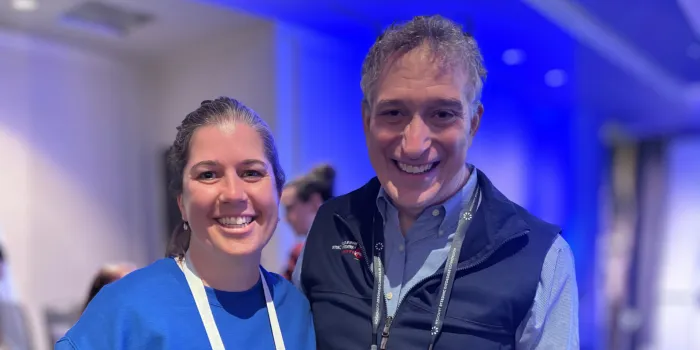
Over the past year, I've worked to reframe the military rejection as a second opportunity to turn pain into purpose. In March 2026, I attended Washington Days with NBDF and advocated for issues important to the entire bleeding disorders community. On the final day, I attended the Medical and Scientific Advisory Council (MASAC) conference, and got to see Dr. Kouides in person for the first time in nearly 20 years. It felt like a full-circle moment, and I am deeply grateful for the care he provided when I was first finding my way.
My journey with von Willebrand disease is far from over. I’m currently collaborating with another patient with VWD from the Colorado HTC on an education and outreach initiative, which will involve meeting with fire departments, police departments, and medical facilities to train first responders and medical personnel. Our goal is to support the next generation of people with bleeding disorders and leave a legacy that helps them live stronger, healthier lives.
If my story resonates with you because of your own symptoms or someone you know, talk to a hematologist, an OB-GYN, or a primary care provider about getting tested and finding out what treatment would be best. In addition to heavy menstrual cycles and excess bleeding with surgeries, other symptoms to look for are frequent nosebleeds, easy or unexplained bruising, and hemorrhaging with childbirth.