
It was the summer after my sophomore year of high school when my symptoms started. At first, they were easy to dismiss as I was preparing for the SAT, juggling a demanding schedule, and pushing myself like I always had.
I attributed feeling lightheaded, dizzy, and unusually tired to stress. When my hair began falling out more than usual and my skin looked paler, I found explanations for those, too. If it wasn’t stress, maybe it was heat or lack of sleep.
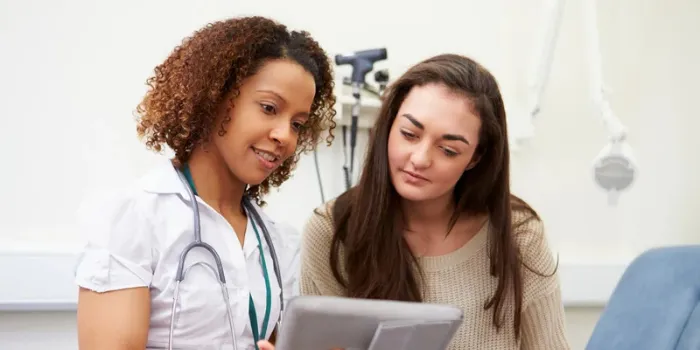
But as the months passed, the dizziness got worse and I became short of breath doing things that had never been difficult before. I brought my concerns to doctors, but because I had a history of pushing myself to exhaustion, stress seemed like the obvious explanation.
On paper, it made sense to call it stress, but I knew what stress felt like, and this felt different. It was frustrating to know something was wrong but not be able to explain it.
How I Was Finally Diagnosed With Severe Iron-Deficiency Anemia
One day, I became so lightheaded that I fainted. I went back to my doctor hoping we’d finally figure out what was happening. Blood work was performed, but nothing appeared dramatically abnormal.
The explanation shifted again. Maybe it was my activity level. Maybe it was dance. Maybe I needed dietary changes. I started taking vitamin supplements and trusted that things would improve. Instead, they got worse. The exhaustion became overwhelming, I experienced brain fog unlike anything I had ever felt, and even sleep didn't help.
Then I fainted again.
More testing was finally performed, and the answer became clear: I had severe iron-deficiency anemia. The diagnosis was a relief: Something really was wrong. But recovery was not immediate, as the supplements helped only to a point.
Throughout the year, I fainted four more times. At one point, conversations about a possible blood transfusion were no longer theoretical. Even now, recovery remains an ongoing process. I still experience dizziness if I stand too quickly, and my junior year was shaped by an illness that took far too long to understand.
What stayed with me most was not just the diagnosis but the uncertainty before it. I was questioning my own experiences because every explanation seemed to point somewhere else.
Discovering Why Women and Girls with Bleeding Disorders Are Often Overlooked
As I began searching for research topics for my AP Research class, I found myself drawn to questions about diagnosis, missed symptoms, and healthcare gaps. Eventually, I came across stories about women with hemophilia.
For decades, hemophilia was largely viewed as a disease that only affected men, and that women were merely carriers of the disease. But I learned that many females experience significant symptoms, including heavy menstrual bleeding, excessive bleeding after procedures, joint issues, and other complications.
Again and again, I encountered stories of women who knew something was wrong but struggled to find answers. Although my experience with anemia was very different from living with a bleeding disorder, I recognized that feeling. I remembered sitting in doctors' offices trying to explain symptoms that did not make sense, wondering whether I was overreacting, wanting someone to look deeper.
I decided to focus my AP Research project on women with hemophilia. Specifically, I wanted to explore a question that seemed increasingly important: If screening relies too heavily on a single measurement, who might be missed, and how can we improve it?
Using Data Science to Improve Hemophilia Carrier Screening
Over the following year, I expanded my project beyond the requirements of my class. I built a computer-generated dataset of 5,000 realistic patient records, including details such as clotting levels, bleeding history, menstrual symptoms, joint health, and genetic test results.
Carriers are often screened mainly by measuring the level of a single clotting protein in the blood. I wanted to know whether looking at several clues together, such as bleeding history, menstrual symptoms, and joint problems, could identify women with hemophilia that one test might miss. I compared 63 different combinations of these clues against the standard single test. Then I used machine learning, a type of computer modeling that finds patterns in data, to see which approaches worked best.
Later, to understand the medical realities behind the data, I spoke with Dr. Adam Cuker of the University of Pennsylvania and Dr. Leslie Raffini of Children's Hospital of Philadelphia. They helped me see that identifying women with hemophilia takes far more than a good algorithm. The problems I was modeling weren’t hypothetical.
My project ultimately earned second place in medicine and health at the Delaware Valley Science Fair, one of the most competitive science fairs in the region. While I was proud of the recognition, what meant even more to me was the opportunity to receive thoughtful feedback from judges and experts who challenged me to think harder about the science and its real-world implications.
While my project did not solve the issue of identifying females with hemophilia, it did deepen my appreciation for the importance of listening to patients, clinicians, and communities whose experiences are not always reflected in a lab result or a diagnostic label.
When I first began this journey, I was simply trying to understand why I felt so unwell. But along the way, I found myself learning from a community of women and girls whose stories revealed just how complicated diagnosis can be and how important recognition truly is.