Washington Days has become a highlight of Candi Mitchum’s year.
“It’s one of my favorite times to advocate,” says Mitchum, of Batesburg, South Carolina. “You get to actually sit down and have a meeting with someone, and they’re taking notes, and they’re really listening.”
Washington Days is the National Bleeding Disorders Foundation’s (NBDF’s) annual advocacy event in Washington, D.C. Hundreds of people of all ages who are affected by bleeding disorders gather in the nation’s Capital to meet with elected officials and congressional staffers, share their stories, and let them know how federal legislation and funding can have a significant impact on their lives.
Mitchum, who has von Willebrand disease (VWD), first learned about Washington Days when she connected with her local chapter, the Bleeding Disorders Association of South Carolina. While she and her family attended the chapter’s 50th anniversary gala and listened to longtime community members share stories, Mitchum says that something clicked.
“No one wants to hear about a bleeding disorder or bleeding female issues. So for them to be talking about this while we’re eating, I was like, I have found my people,” she recalls.
That sense of belonging — and the realization that her story could help others — eventually led her to Washington Days. She wants lawmakers to understand the real-life consequences of delayed diagnosis and the gaps in care that women still face.
“I want to help find better pathways for other people to get their diagnosis and the treatment they need, so they don’t have to wait and wait,” she says. “It’s ridiculous how long it takes for a woman to get a diagnosis.”
In Mitchum’s case, she endured years of heavy menstrual bleeding that started in her teens and had a hysterectomy before she was finally diagnosed with VWD at age 28 after her young son was diagnosed.
At Washington Days this year, she heard about an 18-year-old from another state who also had a hysterectomy before anyone discovered her bleeding disorder. “That should never happen,” Mitchum says. “No woman should ever receive their bleeding disorder diagnosis after a hysterectomy.”
Inside Washington Days: How Bleeding Disorders Advocates Reach Lawmakers
Washington Days stretches over two days in March. On the first day, community members receive training on key issues and learn how to share their stories effectively. The next day, they “hit the Capitol,” as Mitchum puts it, moving from legislative office to legislative office in teams organized by congressional district.
The night before their Hill visits, each state’s team sits down to plan. They decide who will talk about which issue, and they make sure that constituents take the lead when they’re in front of their own member of Congress. Mitchum says those details matter: They make the short time they have with each office more focused and effective.
One of her favorite parts of Washington Days is watching staffers and legislators react as young people speak up. “When the children talk about how they have dealt with their bleeding disorder every day, it really makes an impact,” she says.
The FED UP Bill: A Washington Days Priority for Women With Bleeding Disorders
At this year’s Washington Days, one of the priorities was asking for support of the Fostering Effective Diagnosis and Treatment for Underserved Populations (FED UP) with Bleeding Disorders Act — legislation that pushes for more equality in diagnosis, treatment, and research for women with bleeding disorders.
Mitchum says she was shocked to learn that in a group of nearly 4,000 study participants for a new bleeding disorders treatment, only four were women over age 12. “That really hurt my heart,” she says. “What do you mean? No one’s been represented.”
With new medications for VWD and hemophilia coming to market, she wants to make sure women are not left out. “We need to know how these medications are going to react in a woman’s body.”
Seeing the FED UP bill included as one of the official “asks” at Washington Days this year energized her, Mitchum says. “It just got me really excited, because I was like, this bill finally is going somewhere.”
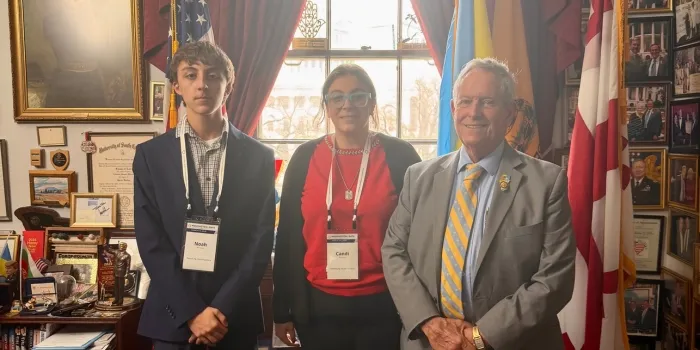
Mitchum, who is now the vice president of the Bleeding Disorders Association of South Carolina, also played a key role in securing support for the FED UP bill from her congressman, Rep. Joe Wilson. When she learned advocates were looking for a Republican co-sponsor, she immediately thought of Wilson, since she is his constituent and knew he had long been “very pro bleeding disorder community.”
Once her team explained the bill to Wilson and his staff, she says, they were visibly excited — and some staff members even followed up afterward with questions about the statistics behind it.
For Mitchum, those ongoing conversations — and the chance to come back year after year — are what make the annual advocacy event so powerful. “Going to Washington Days can really light a fire in people,” she says.
If you’re interested in participating in NBDF’s next Washington Days or your state’s next advocacy day, contact your local NBDF chapter.