
For people with heavy menstrual bleeding, finding effective treatments can be elusive. The right intervention is unique to each person, and getting to it frequently involves a trial-and-error approach to medications and hormones. But there is renewed hope for relief.
Experts in the bleeding disorders community are enthusiastic about a nonpharmaceutical, nonhormonal therapy — a wearable neurostimulation device — with the potential to usher in a new era in menstrual care.
“What we have right now works well for many people, but it’s not perfect for all,” says Michael Recht, M.D., Ph.D., a pediatric hematologist and chief medical and scientific adviser of Pathway to Cures, the National Bleeding Disorders Foundation’s venture philanthropy fund. “So, having a breadth of therapeutic options is very important in this space. There is still an unmet need in this community.”
Current approaches to managing heavy menstrual bleeding often come with trade-offs. For example, some medications that strengthen or stabilize blood clots can increase the risk of thrombosis — developing clots where you don’t want them — and hormonal interventions may have side effects such as mood changes, weight gain, or restricted developmental growth.
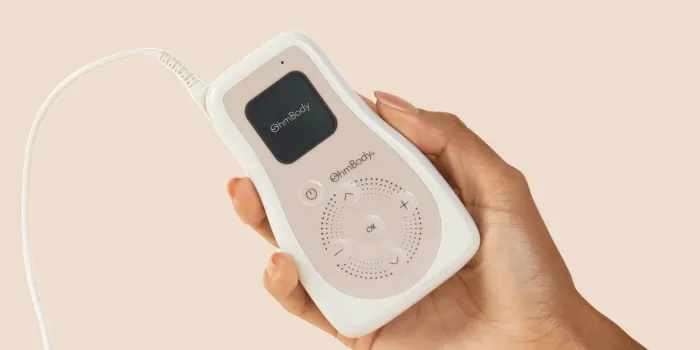
The wearable device, called OhmBody, uses neurostimulation rather than clotting medications or hormones. The wellness device was developed by Spark Biomedical and is backed by Pathway to Cures.
How Neurostimulation Works for Heavy Menstrual Bleeding
Neurostimulation works by priming platelets — the body’s primary blood-clotting cells — that are temporarily housed in the spleen, Recht says. Through stimulation of the vagus nerve, activated platelets travel to areas where bleeding is occurring and help limit blood loss.
The technology behind OhmBody builds on two decades of neurostimulation research at the Feinstein Institutes for Medical Research, part of Northwell Health in New York.
In a 2025 clinical study involving people with and without von Willebrand disease who experienced heavy menstrual bleeding, participants saw more than a 50% reduction in their pictorial blood loss assessment chart (PBAC) score measuring menstrual blood loss and nearly a full day reduction in duration of bleeding when using this type of neurostimulation, Recht says.
With OhmBody, users place an adhesive earpiece behind their left ear connecting to a battery-operated device. Through electrodes in the earpiece, electrical stimulation is delivered to the vagus and trigeminal nerves. Research has shown that this regulates the autonomous nervous system and balances body processes.
OhmBody is recommended to be used two consecutive hours any day of menstruation or when symptoms are felt. “You can do whatever you want while you’re wearing it,” Recht explains. “You can even exercise.”
Why Having More Intervention Options Matters
As a noninvasive, nonpharmacological, prescription-free therapy, OhmBody offers another option in a space where individualized care matters deeply, say Pathway to Cures leaders, which is partly what makes the technology compelling.
“It’s very exciting to me that we have something that is available to our community now that can make a difference,” says Teri Willey, founding managing director of Pathway to Cures.
Because neurostimulation is distinct from factor replacement and other traditional therapies to manage bleeding disorders, OhmBody can be used in conjunction with those therapies.
“OhmBody doesn’t eliminate the need for factor infusions, but you might use a dose or two less during the course of the period,” Recht says. “It’s a completely different mechanism of action, so there really is no overlap.”
Expanding Access to Neurostimulation Devices for Heavy Bleeding
Though OhmBody expands the options that women, girls, and people with the potential to menstruate have to control heavy bleeding, access remains a challenge.
Experts involved with Pathway to Cures acknowledge that the device and replacement earpieces can represent a meaningful expense for patients and families, particularly because it isn’t yet covered by insurance.
“Affordability is the key for us making sure that those who are in need, who don’t have the monetary wherewithal, would still be able to get it,” says Tim Brent, venture principal of Pathway to Cures and board observer at Spark Biomedical. He adds that executive management is working to improve access to the device by it being covered through insurance.
A clinical trial called LUNA — short for Lessening Uncomfortable Menstrual Symptoms with Auricular Neurostimulation — is underway to determine OhmBody’s safety and efficacy, with the goal of receiving U.S. Food and Drug Administration approval and ultimately opening pathways toward broader coverage.
Currently, as a wellness device, OhmBody is eligible for reimbursement through flexible spending accounts (FSAs) and health savings accounts (HSAs).
Willey says she is glad that people with heavy menstrual bleeding can get the device now, without struggling to get a bleeding disorder diagnosis, which is a common barrier.
Recht agrees. “It’s important to help make the technology available to people who need it,” he says. “We really are looking at any kind of therapy intervention that is going to improve the quality of life of everybody in the inheritable blood and bleeding disorders community.”